
In-Vessel Composting
Operator: University of Idaho
Location: Moscow, ID
Feedstock: Green Waste & Food Waste
Capacity: 360 T/year
Year Installed: 2024
Project Components:
Location: Moscow, ID
Feedstock: Green Waste & Food Waste
Capacity: 360 T/year
Year Installed: 2024
Project Components:
- Earth Flow IM 40
- Automatic Mixing and Aeration
- Cold Weather Insulation Package
- Tote Tipper



Client’s Requirements
The University of Idaho’s landfill disposal costs are high, economically and environmentally, partially because landfill disposal trips require trucks to make a 450 mile round trip. As part of a broader recycling and waste reduction initiative, university leaders wanted a predictable and easy composting solution for campus food waste.
The primary goal was to compost as much campus food waste as possible, in order to reduce disposal costs and the campus’s greenhouse gas footprint. The university sustainability & waste management departments estimated that the campus was spending approximately $30,000 annually to send approximately 300 tons of compostable food waste to the landfill.

Our Solution
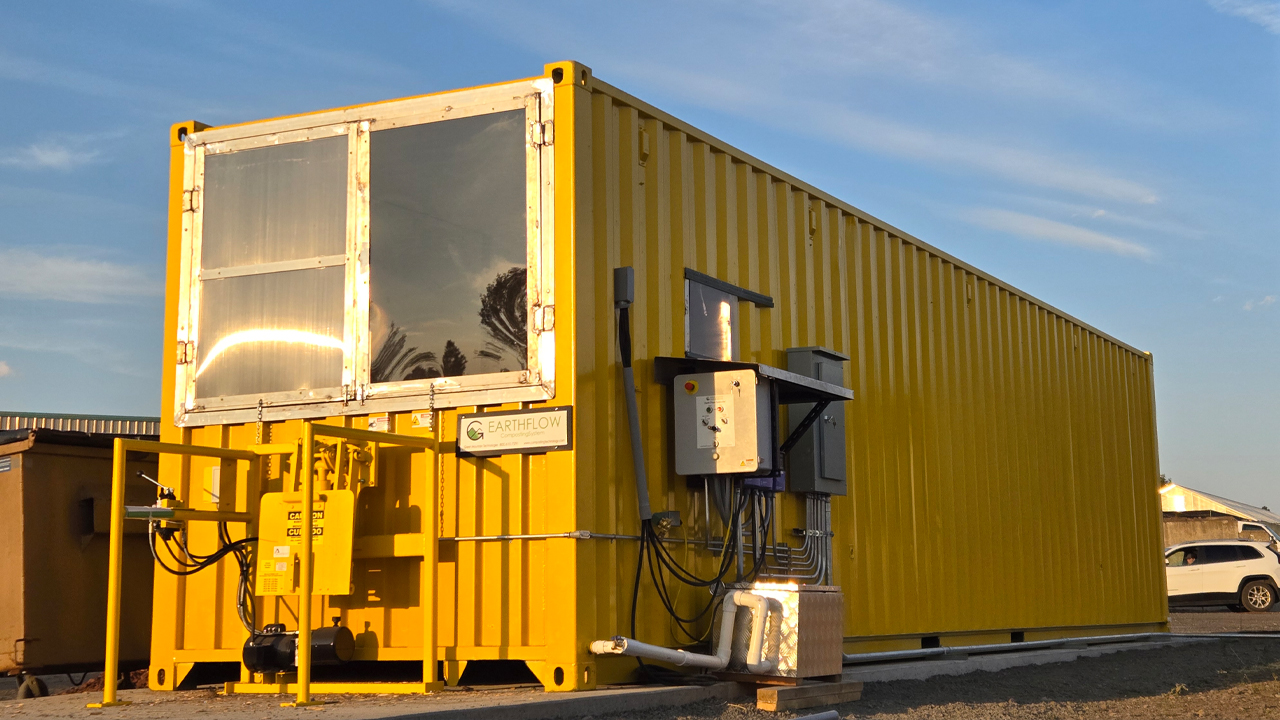
The University of Idaho selected a 40’ Intermodal Earth Flow composting system from GMT. Campus leaders made this choice based on reviews from past Earth Flow clients and the Earth Flow’s ability to automatically compost campus food waste in addition to other organic materials with an odor controlled process.
As of September 2024 the campus is processing the food waste from most of campus dining services, and will ramp up capacity throughout the 2024-25 school year. Approximately 300 tons per year, or 60% of the campus’s annual food waste, will be processed into high value compost. This is expected to save the campus approximately $30,000 per year on landfill costs.
Students are involved with management of the composting system, and campus leaders are exploring ways to further integrate composting into various academic curricula. Compost produced is used for landscaping amendment for the University grounds and on the organic student gardens, and may also be sold to the local community.
“The Earth Flow composter should save us about $30,000 annually in landfill disposal fees. Our landfill costs are high, with trucks needing to do a 450 mile round trip. Between eliminating methane from anaerobic decomposition, and reducing the fuel necessary to transport this waste, this composting program will significantly reduce our GHG emissions.”
- Sarah Dawson, Ph.D. Sustainability Director, University of Idaho
Contact Us