
In-Vessel Composting
Operator: Kalaupapa National Historical Park
Location: Moloka’i, HI
Feedstock: Food, Green & Agricultural Waste
Capacity: 250 T/year
Year Installed: 2026
Project Components:
Location: Moloka’i, HI
Feedstock: Food, Green & Agricultural Waste
Capacity: 250 T/year
Year Installed: 2026
Project Components:



Client’s Requirements
Kalaupapa National Historical Park required a sustainable organics management solution capable of reducing the volume of material that must be flown or barged from the remote community. Located on the isolated Kalaupapa Peninsula and surrounded by steep sea cliffs, the community has highly limited access, making disposal expensive and logistically challenging.
The park previously used an Earth Tub composting system from Green Mountain Technologies (GMT) and sought to modernize its composting operations through a competitive RFP process. The new solution needed to provide reliable processing, odor and vector control, and an efficient approach for managing food and green waste generated throughout the community.
Community integration was also an important consideration. The program engages park staff, residents, and maintenance crews through ongoing education and organic waste management practices, helping build participation and support for a more sustainable local organics program.

Our Solution
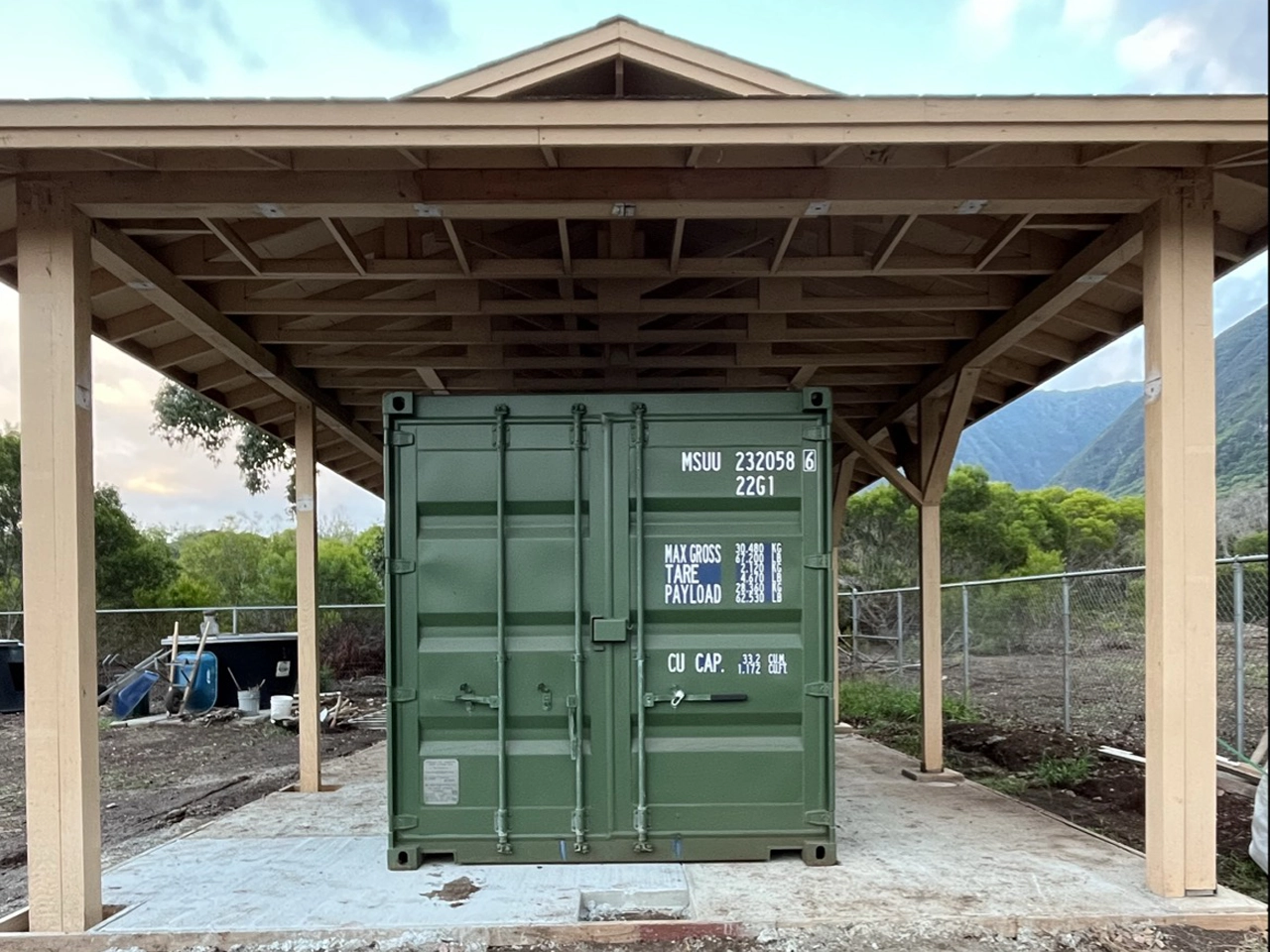
GMT was selected through the competitive RFP process based on its proven track record working with national parks and the strength of its equipment offering. GMT installed a 20’ Intermodal Earth Flow designed to streamline loading, accelerate decomposition, and provide automated odor and vector control.
The Earth Flow combines community food waste with locally available carbon-rich materials, including yard clippings, wood chips, grass, leaves, egg cartons, and shredded paper. By managing these materials locally, Kalaupapa can divert organics from disposal while producing high-quality compost for agricultural use in the area.
The enclosed design also helps address pest concerns, including the Coconut Rhinoceros Beetle, by keeping composting materials contained throughout the process. Automation, odor control, and reliable operation make the Earth Flow well suited to the peninsula’s unique logistical constraints.
By converting locally generated organics into a beneficial resource, the project reduces the amount of material requiring disposal and lowers the costs and logistical challenges associated with moving waste off the peninsula. It also reduces the need to ship in soil amendments and fertilizers. The result is a more self-sufficient, closed-loop approach to organics management suited to Kalaupapa’s uniquely remote setting.