
In-Vessel Composting
Operator: Ka Waihona O Ka Na'auao Public Charter School
Location: O’ahu, HI
Feedstock: Food & Agricultural Waste
Capacity: 250 T/year
Year Installed: 2025
Project Components:
Location: O’ahu, HI
Feedstock: Food & Agricultural Waste
Capacity: 250 T/year
Year Installed: 2025
Project Components:



Client’s Requirements
Ka Waihona o Ka Naʻauao Public Charter School is a K–12 school committed to developing socially responsible, resilient, and resourceful young people through academic excellence, social confidence, and cultural awareness. As part of this mission, the school sought to integrate sustainability and resource management into its campus agriculture and educational programs.
The school wanted an on-site solution to manage food waste from its cafeteria and school farm while supporting a closed-loop approach to food production. By converting organic waste into compost for use on the farm, the project supports food sovereignty and helps create healthy, productive soil directly on campus. The initiative also aligns with broader efforts in Hawaiʻi to strengthen local resource management and circularity.
Mālama ʻāina, the Hawaiian ethos of caring for and tending the land, is woven into the school’s approach to sustainability and education. Through the composting program, students gain hands-on experience managing organic resources and see firsthand how food waste can become a resource for soil health, agriculture, and food production. The program also creates opportunities to build practical skills and explore future sustainability and economic pathways, including the potential distribution or sale of compost.

Our Solution
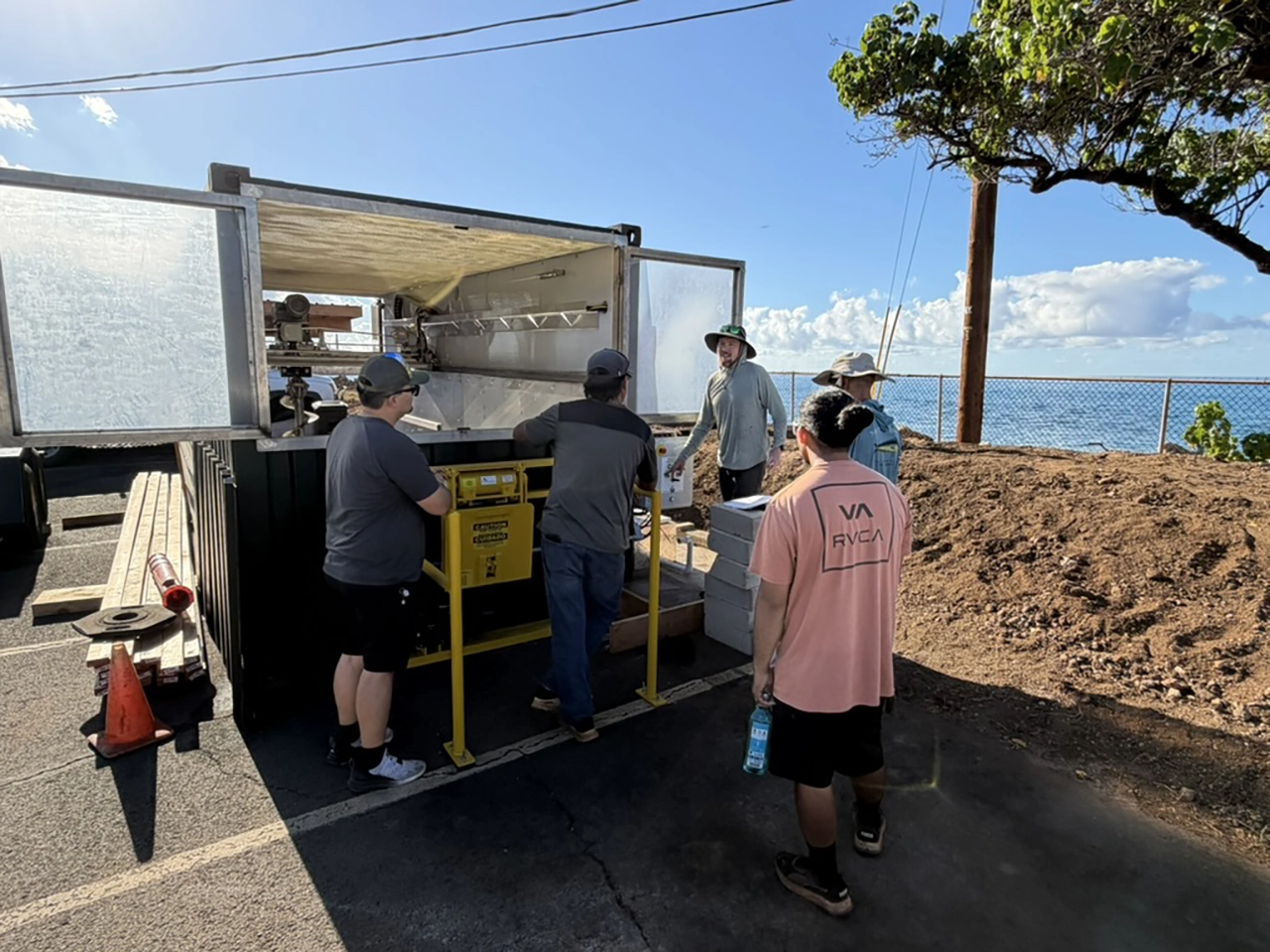
GMT implemented an Earth Flow IM-20 automated in-vessel composting system at Ka Waihona o Ka Naʻauao in partnership with the Hawaiʻi Department of Education. The system was selected based on the successful installation at Full Circle Farms. The local support provided by Full Circle Farms gives the school access to local operational and maintenance support for the lifetime of the vessel.
By converting cafeteria and agricultural organic waste into nutrient-rich compost, the Earth Flow supports the school’s closed-loop approach to campus agriculture. Automated aeration, moisture, and odor controls provide consistent composting conditions, while the integrated biofilter helps manage odors. Its enclosed design also helps prevent Coconut Rhinoceros Beetles from entering the active compost. Lastly the shipping container-based design helps to reduce transportation and delivery costs when bringing the Earth Flow IM-20 to Hawaiʻi.
The Earth Flow integrates resource management into the school’s educational programs, giving students hands-on experience with a closed-loop system while creating opportunities to connect composting with agriculture, soil production, and future economic pathways.