
In-Vessel Composting
Operator: City of Deerfield Beach
Location: Broward County, FL
Feedstock: Food Waste
Capacity: 600 T/year
Year Installed: 2026
Project Components:
Location: Broward County, FL
Feedstock: Food Waste
Capacity: 600 T/year
Year Installed: 2026
Project Components:

Client’s Requirements
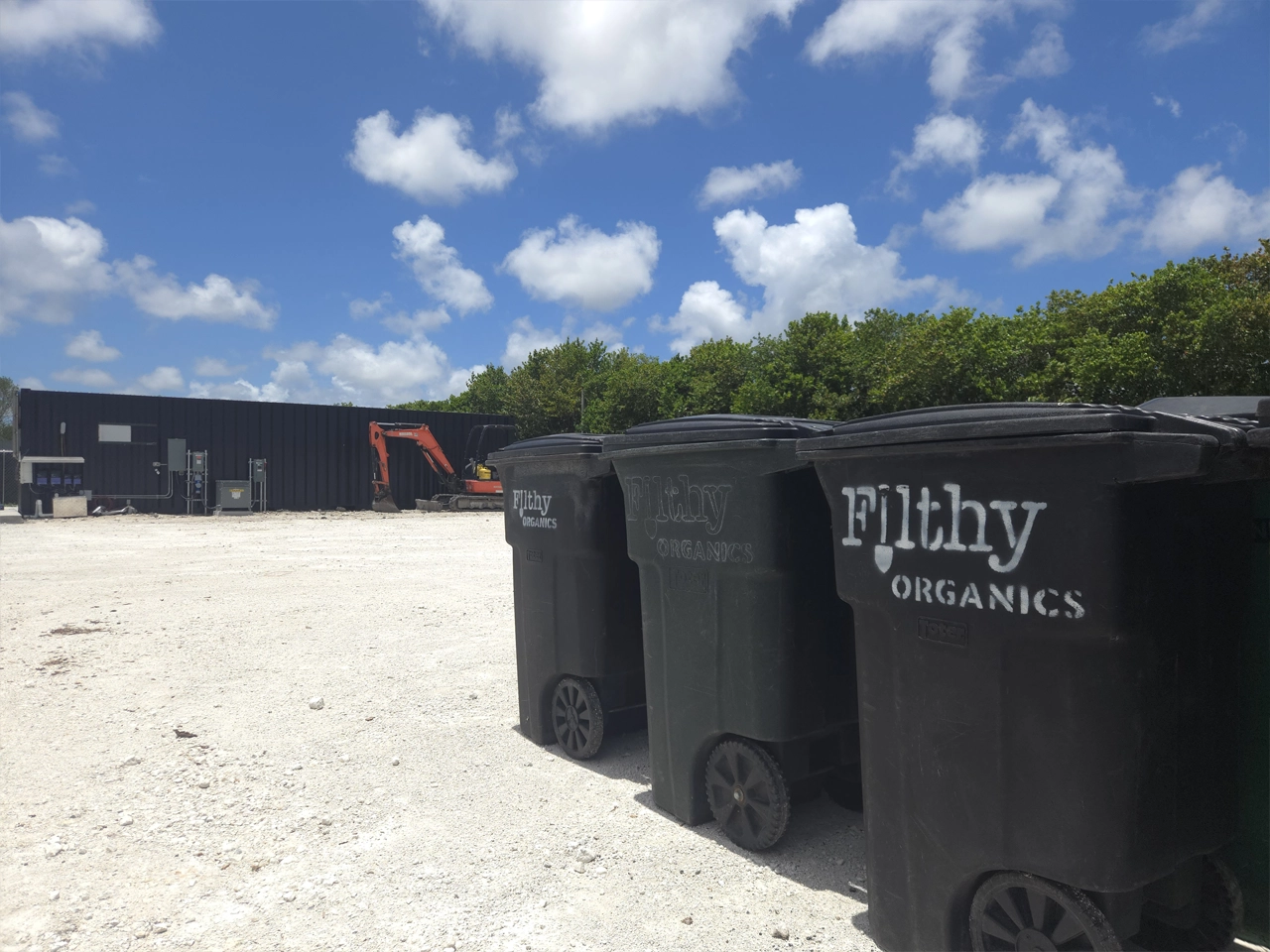
Filthy Organics partnered with the City of Deerfield Beach as part of a USDA-funded public-private partnership to expand the City’s successful community composting program. The City launched the program to encourage residents to divert food scraps from the landfill and transform them into nutrient-rich compost.
Through this cooperative model, the City and Filthy Organics were able to combine municipal resources with private composting expertise to create a sustainable, community-based composting operation. The City provided Filthy Organics with land, zoning assistance, and local wood chip carbon feedstocks. Filthy Organics managed daily composting operations, including feedstock blending, moisture control, and Florida Department of Environmental Protection (FDEP) compliance reporting.
To support the continued success and expansion of the program, the City and Filthy Organics needed a composting solution that could increase processing capacity with minimal adverse environmental or odor impacts.

Our Solution
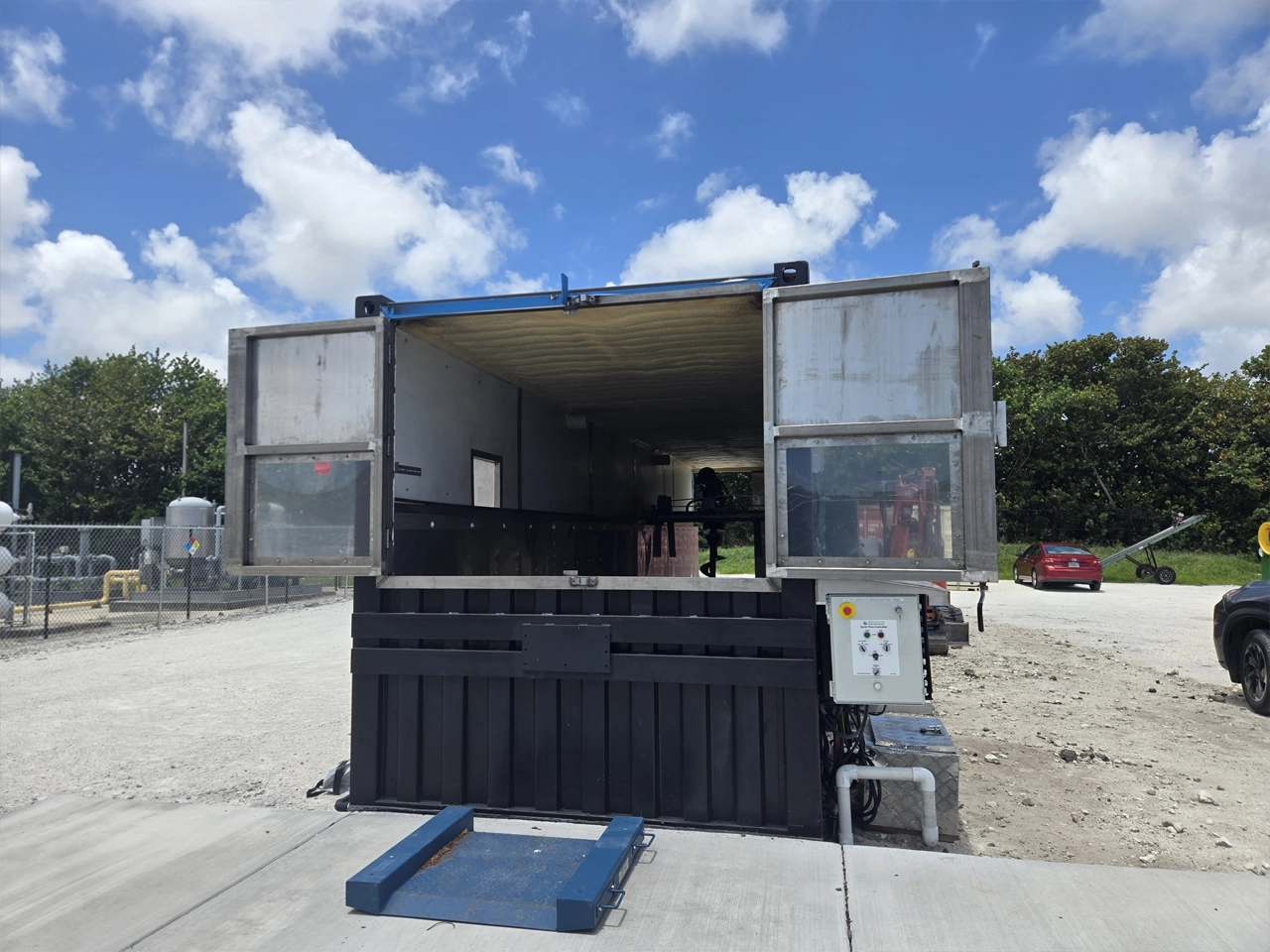
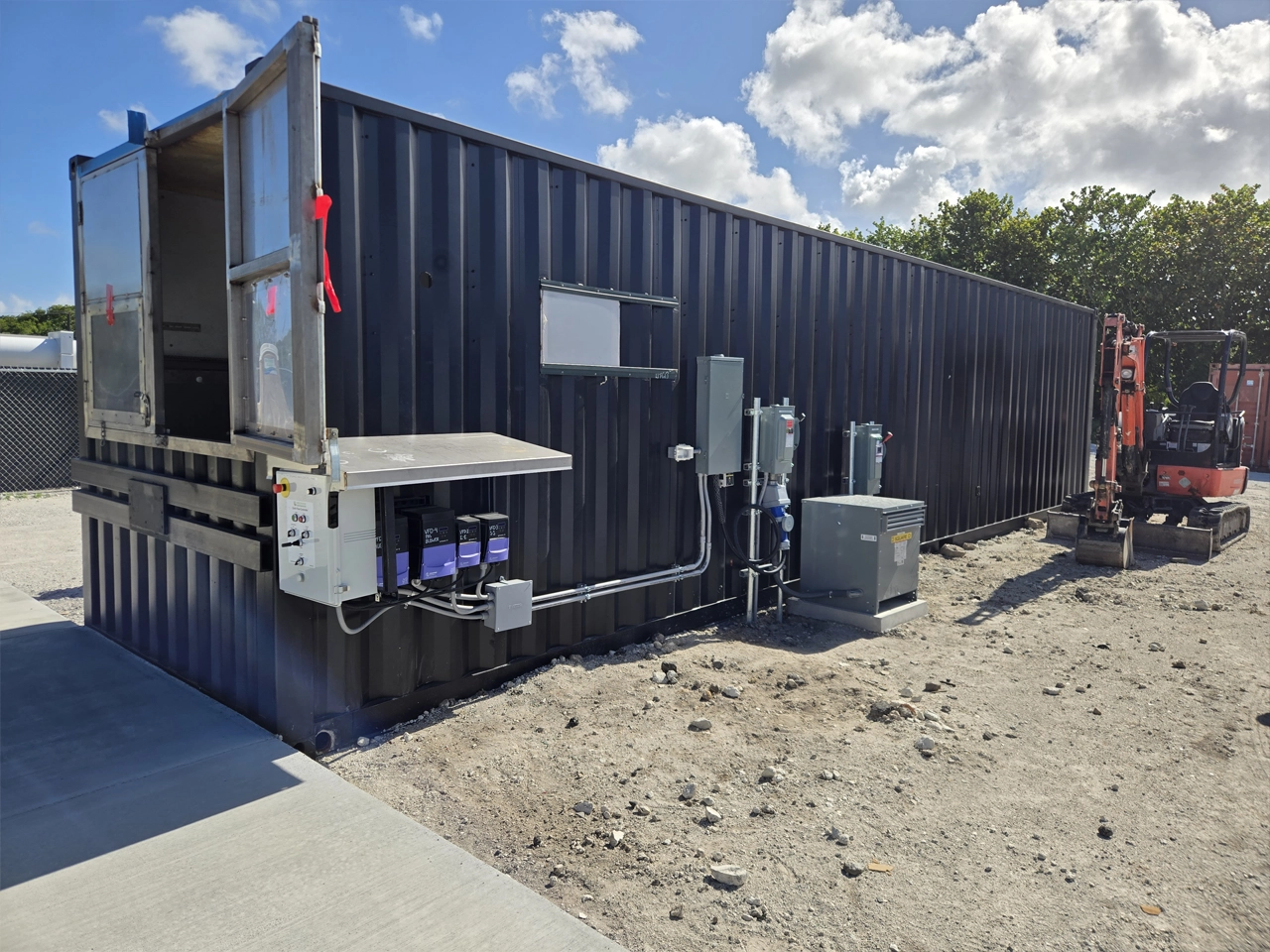
To support the City of Deerfield Beach and Filthy Organics’ growing composting program, GMT worked with the project partners to install an Earth Flow IM-40 in-vessel composting system designed to process municipal food waste while maintaining consistent composting conditions. The system’s capacity, aeration, process control, and modular design allowed Filthy Organics to expand composting operations while using the City’s existing site and resources.
The Earth Flow IM-40 serves as the primary active composting stage, processing incoming food waste for approximately 7–10 days under controlled aeration and temperature conditions. Following the active composting phase, material is transferred into custom curing bins built from modified shipping containers equipped with forced aeration. This additional curing stage allows the material to continue stabilizing and supports the conditions needed to achieve Process to Further Reduce Pathogens (PFRP) requirements.
By combining GMT’s in-vessel composting technology with Filthy Organics’ innovative curing approach, the project partners established a scalable composting system that supports reliable processing of municipal food waste while maximizing available resources and advancing local organics diversion efforts.