
ASP Composting
Operator: Cowlitz Valley Compost
Location: Longview, WA
Feedstock: Food and Green Waste
Capacity: 50,000 T/year
Year Installed: 2016
Project Components:
Location: Longview, WA
Feedstock: Food and Green Waste
Capacity: 50,000 T/year
Year Installed: 2016
Project Components:

Client’s Requirements
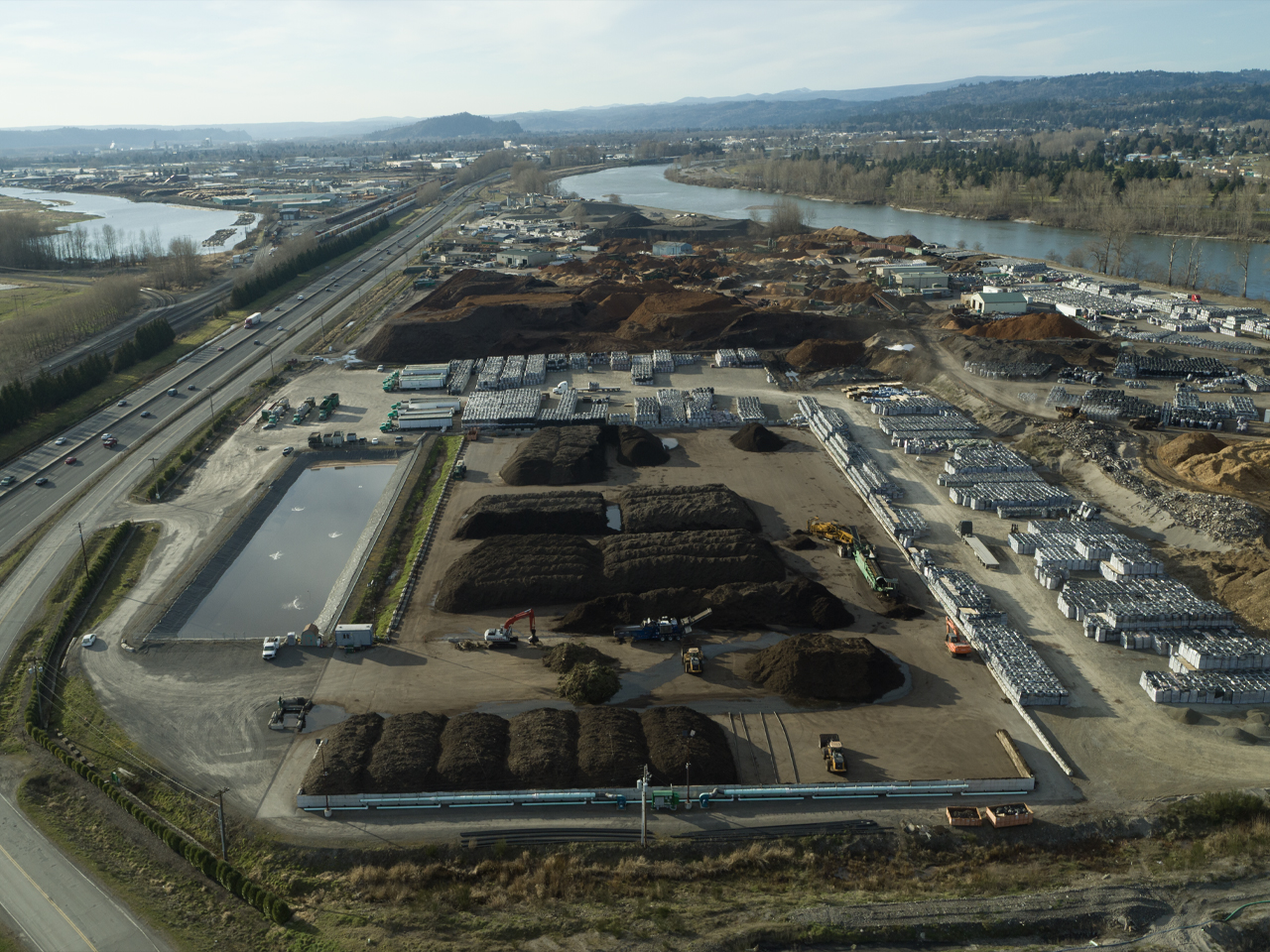
Cowlitz Valley Compost, based in Longview, Washington, set out to convert a former wood-waste transfer site into a full-scale green waste composting operation. The owners recognized growing regional demand for high-quality compost and aimed to repurpose their facility to meet that need. However, the transformation from a basic reload yard to a fully operational composting site posed significant technical and regulatory challenges.
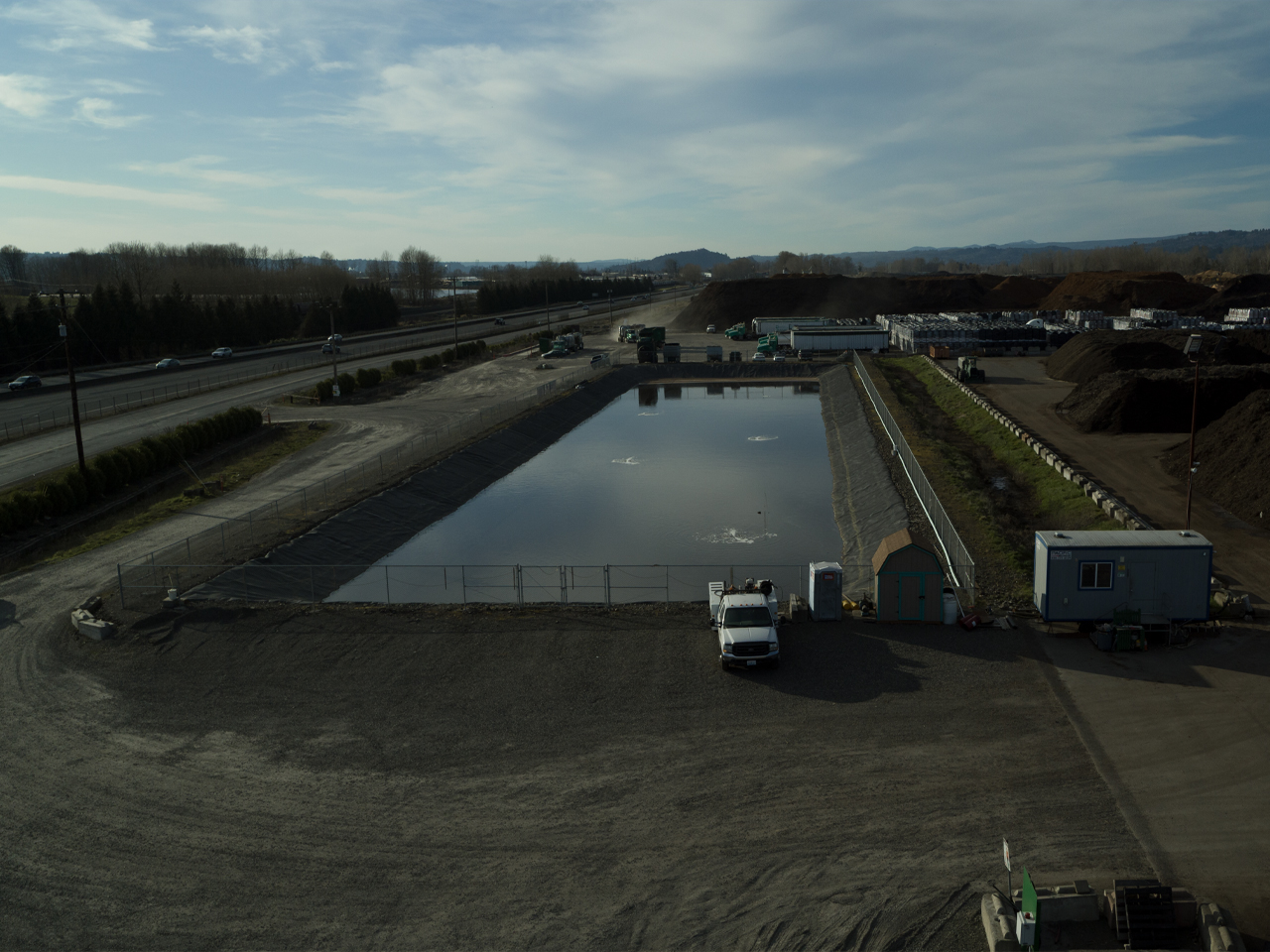
To realize this transition, the client needed a composting system that could:- Process large volumes of material on a small footprint that minimized runoff due to the very high rainfall.
- Fit within the physical constraints of the existing site without major earthwork or new construction, minimizing delays in compost permitting.
- Comply with Washington State solid waste regulations and Southwest Clean Air Agency air-quality standards.
- Support reliable, low-labor daily operations with automated temperature control and real-time monitoring.
- Be scalable and supported by professional compost consulting to ensure best practices in facility operation and feedstock management.
Ultimately, the client required a well-integrated, cost-effective compost facility design that could handle the throughput of a commercial operation while remaining compliant and easy to operate.

Our Solution
Green Mountain Technologies provided a complete compost facility design solution centered around a high-efficiency aerated static pile (ASP) system, tailored specifically for Cowlitz Valley Compost’s operational goals and site limitations. Drawing on decades of compost consulting experience, GMT engineered and delivered a modular, scalable system designed to meet both immediate needs and long-term expansion.
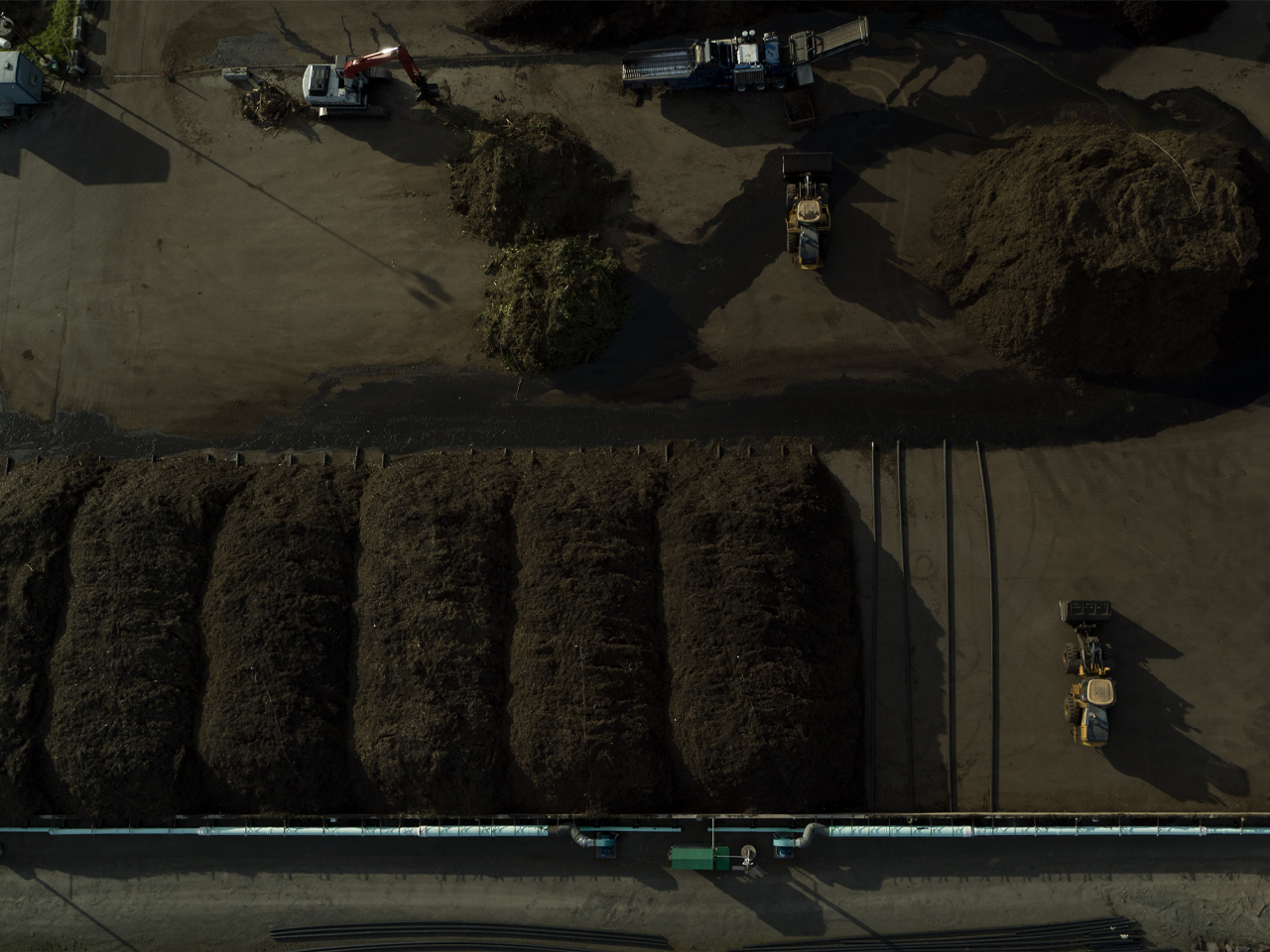
Key system components included:- A pipe-on-grade aeration system using above-grade HDPE laterals and headers. This layout maximized usable surface area for loaders and eliminated the need for trenching, keeping the facility footprint compact, minimizing stormwater generation and construction costs.
- Ten independently controlled ASP zones with two centralized blowers. This modular structure allows operators to fine-tune airflow for varying feedstocks and composting phases, optimizing microbial activity and compost quality.
- Hardwired temperature probes in each zone connected to GMT’s WebMACS™ control platform, enabling remote monitoring, automated blower operation, and data logging for compliance and operational decisions.
- A positive-pressure aeration system with a biocover, ensuring effective odor control and regulatory compliance with local air-quality standards.
As showcased in the video, the system’s layout, automation, and airflow controls create a clean, user-friendly operating environment. With GMT’s ongoing compost consulting support, Cowlitz Valley Compost now processes over 50,000 tons of green waste annually and produces STA-certified compost for the surrounding region.