
In-Vessel Composting
Operator: Compost Colorado
Location: Denver, CO
Feedstock: Food & Green Waste
Capacity: 800 T/year
Year Installed: 2025
Project Components:
Location: Denver, CO
Feedstock: Food & Green Waste
Capacity: 800 T/year
Year Installed: 2025
Project Components:

Client’s Requirements
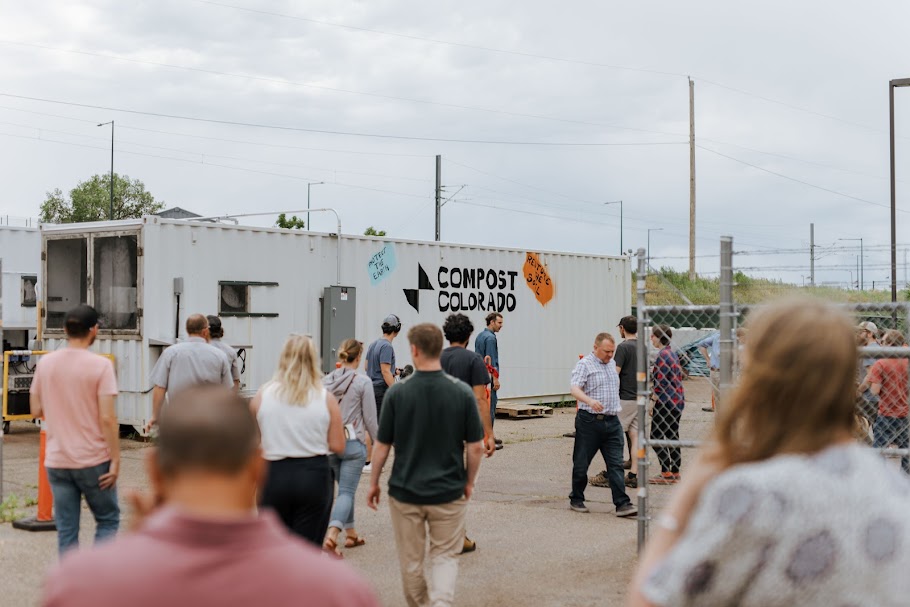
Compost Colorado, (CoCo), is an Employee-Owned, Public Benefit Company that goes above and beyond to support its local community. With support from Colorado Dept. of Public Health and Environment and in close collaboration with Denver’s office of Climate Action, Sustainability, and Resiliency, CoCo is establishing Denver’s first official composting facility.
CoCo’s mission is to create a resilient resource management system that revitalizes local soil, reduces contamination, and lowers greenhouse gas emissions from trucking organic waste to distant facilities. Starting in 2024 as a community food waste collection project, they aimed to expand into processing their own compost—requiring a proven, economically viable hot aerobic in-vessel composting system capable of handling compostable plastics.
Following Denver’s 2022 Waste No More ordinance requiring expanded composting, Compost Colorado (CoCo) aimed to establish a local, resilient organics processing hub at the National Western Center. Their goals were to:
CoCo collaborated closely with the National Western Center Authority to develop the site, supported by a grant from the Colorado Department of Public Health and Environment’s Waste No More initiative, which provided crucial funding and strategic backing.
In 2024, what started out as a community food waste collection project was ready to expand into having its own composting facility. After much research they decided to find an In-Vessel composting system that met their particular needs. The system needed to be proven, economically strong and capable of effectively processing compostable plastics.
CoCo’s mission is to create a resilient resource management system that revitalizes local soil, reduces contamination, and lowers greenhouse gas emissions from trucking organic waste to distant facilities. Starting in 2024 as a community food waste collection project, they aimed to expand into processing their own compost—requiring a proven, economically viable hot aerobic in-vessel composting system capable of handling compostable plastics.
Following Denver’s 2022 Waste No More ordinance requiring expanded composting, Compost Colorado (CoCo) aimed to establish a local, resilient organics processing hub at the National Western Center. Their goals were to:
- Process over 1,000 tons annually within a small footprint
- Reduce emissions from long-distance hauling
- Support environmental justice efforts in Globeville
- Create a flexible, regulation-resistant facility adaptable to changing policies
CoCo collaborated closely with the National Western Center Authority to develop the site, supported by a grant from the Colorado Department of Public Health and Environment’s Waste No More initiative, which provided crucial funding and strategic backing.
In 2024, what started out as a community food waste collection project was ready to expand into having its own composting facility. After much research they decided to find an In-Vessel composting system that met their particular needs. The system needed to be proven, economically strong and capable of effectively processing compostable plastics.

Our Solution
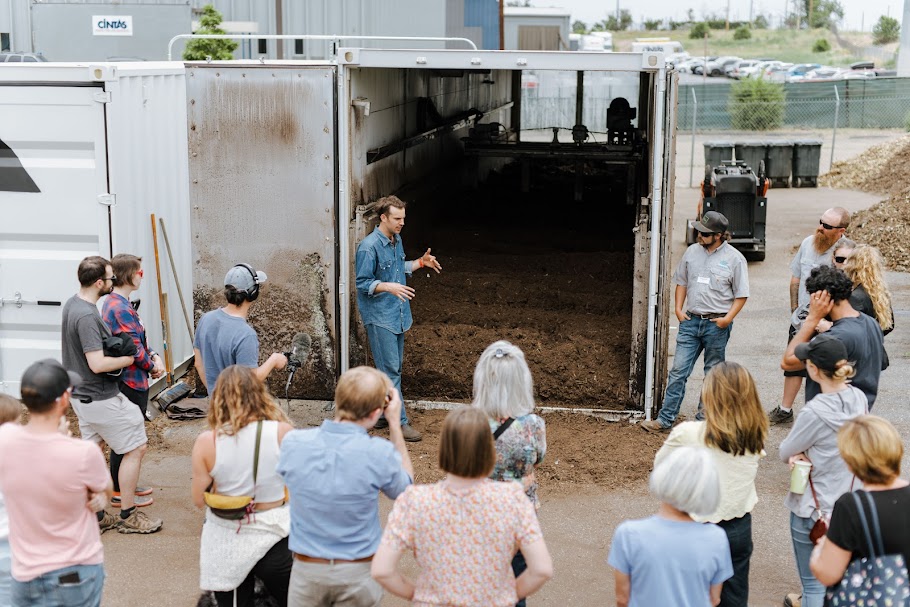
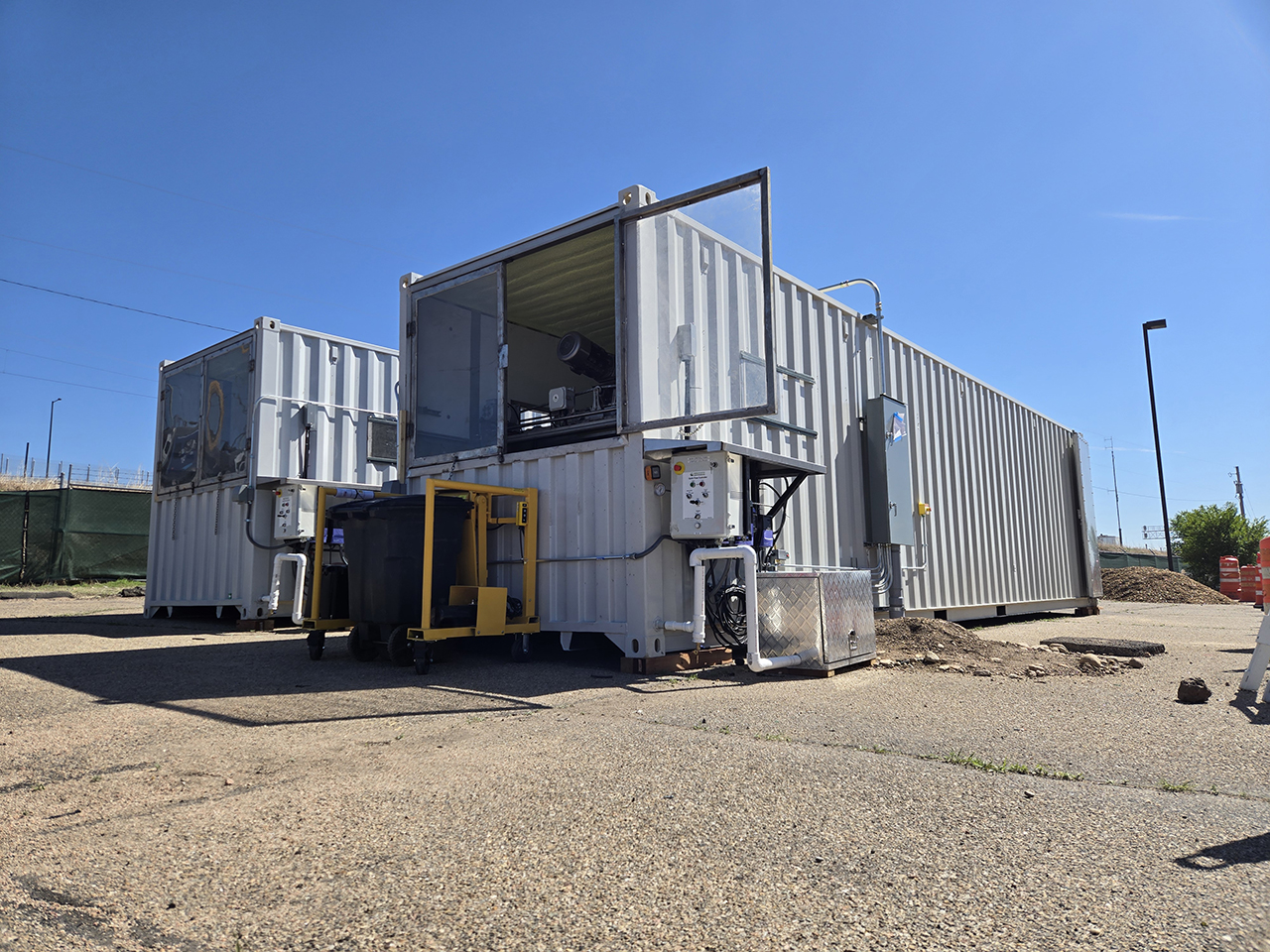
CoCo selected two Green Mountain Technology Earth Flow hot aerobic in-vessel composting systems as the heart of their new operation. Known for their ability to rapidly process organics and biodegradable plastics—in less than four weeks—the Earth Flow machines are compact (under 500 sq ft) and feature integrated moisture systems, perfect for Denver’s high desert climate.
The results of the 2024 Compost Consortium study on the effectiveness of various composting processes at breaking down biodegradable plastics made the Earth Flow in vessel composting system an obvious choice.
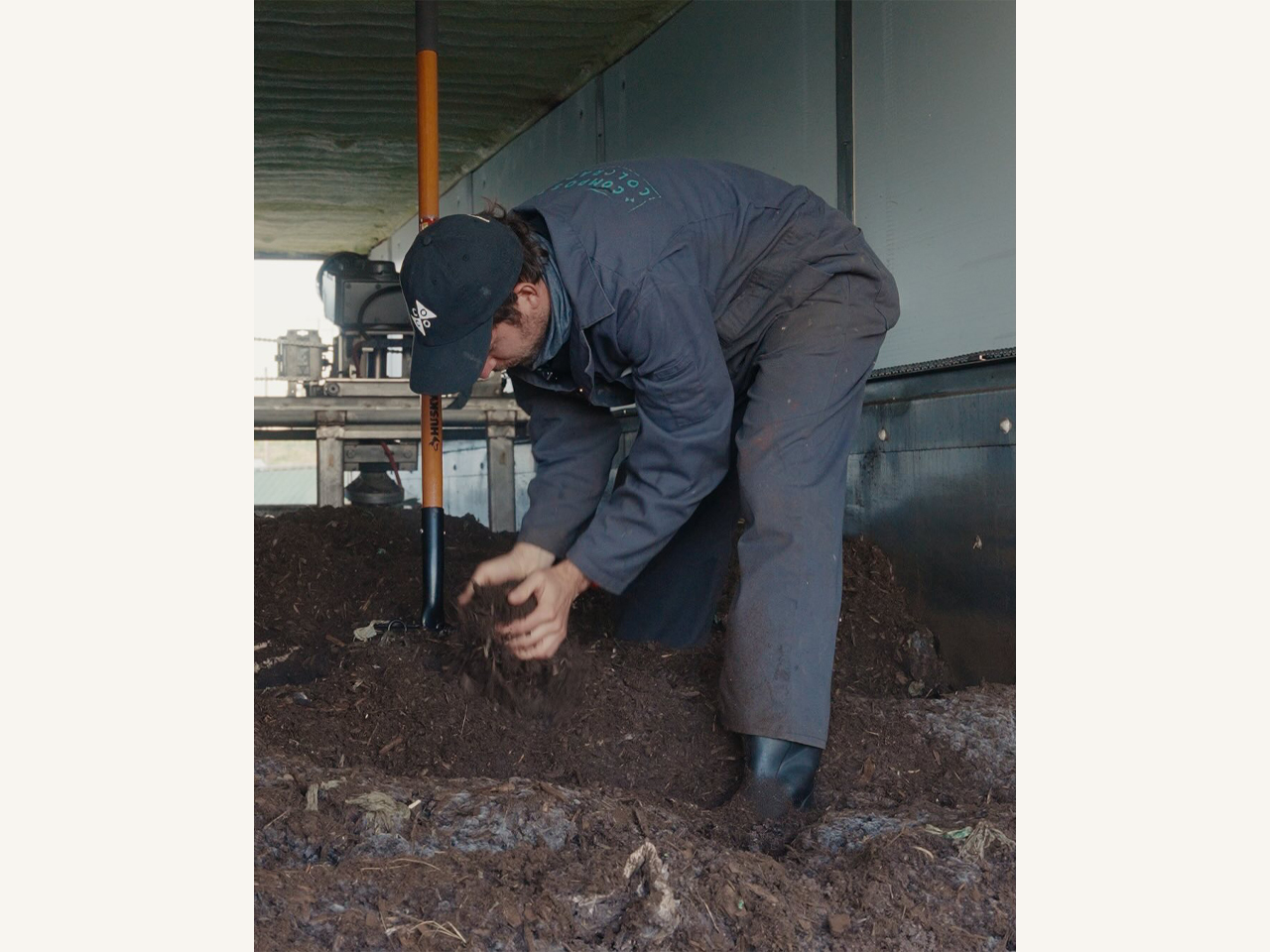
Commissioned in 2025, these systems fill a critical regional gap, converting food waste and plastics into high-quality compost while drastically reducing emissions from trucking. They also support the city’s goals of local food sovereignty, environmental justice, and sustainable community resilience.
Climate conditions in Denver’s high desert make open-air windrow composting challenging due to rapid drying below optimal moisture levels. An advantage of the Earth Flow system is its integrated moisture addition via the mixing auger, ensuring consistent moisture content and fast, high-quality compost production.
CoCo is also exploring plans to expand further with a simple ASP bunker system to effectively manage secondary processing after initial composting in the Earth Flows.
This project exemplifies how strategic partnerships, innovative technology, and targeted funding can create a scalable, community-focused organics infrastructure—promoting equitable waste management, reducing environmental impacts, and building a resilient local food system.
By developing their own internal compost processing capacity CoCo is cultivating a more resilient paradigm for managing resources, one that: revitalizes local soil, mitigates contamination, and reduces greenhouse gas emissions that would otherwise be emitted from trucking materials to distant industrial facilities.
“We appreciate the GMT team and how responsive you are to our needs" - Natalie McKinney, Chief Program Officer & “Really simple to use — just load it in and turn it on. Super straightforward and easy to operate. "
- Mitch Steffey, Compost Captain
Contact Us